

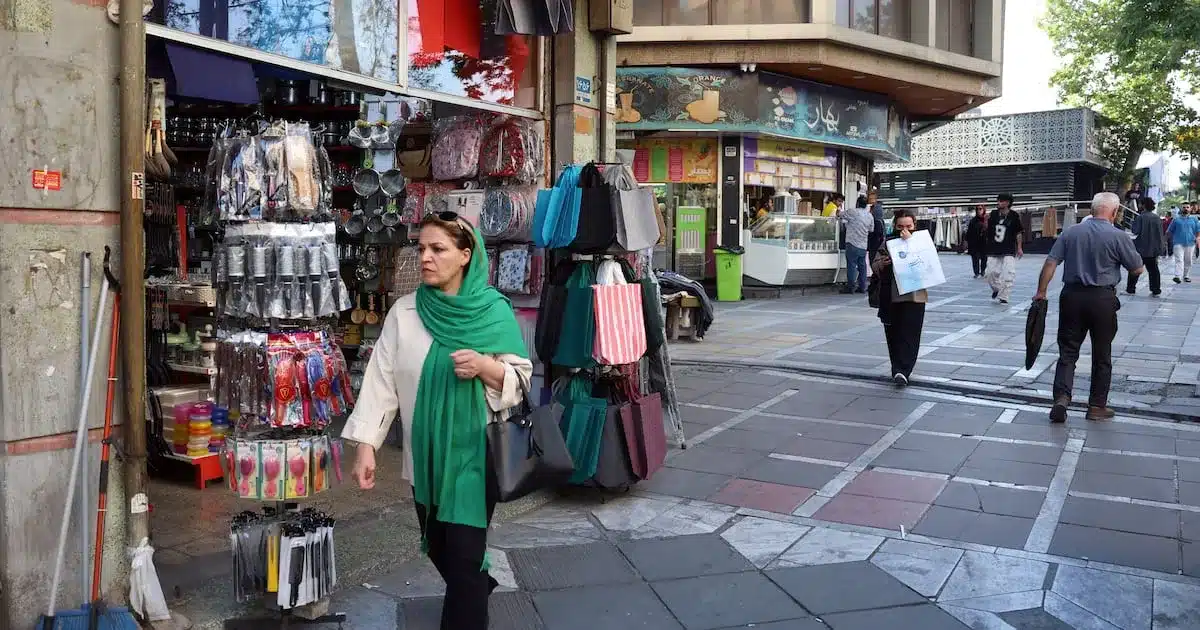
Despite facing unprecedented challenges including military confrontations with the United States and Israel, the closure of the Strait of Hormuz, and soaring inflation, Iran’s economy has not collapsed. Analysis suggests that Iran’s “survival economy,” built over years of conflict and international sanctions, is currently preventing economic downfall.
Economic Hardship Precedes Recent Escalation
Even before the recent military actions involving the U.S. and Israel, Iran’s economy was in a precarious state. Chronic high prices and a shortage of foreign currency had led to a sharp decline in the value of the Iranian rial. Reports indicate that some Iranian households have resorted to substituting cheaper protein sources like fava beans for more expensive options such as beef and chicken due to the steep rise in the cost of essential goods like eggs, rice, and potatoes.
Devastating Impact of Recent Conflict
The recent conflict has exacerbated the situation significantly. The joint actions by the U.S. and Israel have resulted in the destruction of not only homes, hospitals, and schools but also gas facilities and steel plants. The Iranian government recently announced that the economic damage from the missile strikes alone amounts to approximately $270 billion, a figure that approximates the country’s projected Gross Domestic Product (GDP) for the current year. Businesses have also suffered direct hits, with thousands of enterprises forced to close. A substantial number have yet to reopen.
Economic Outlook and Unemployment Crisis
The International Monetary Fund (IMF) forecasts a contraction of 6.1% for the Iranian economy this year, marking the most significant economic downturn in decades. The unemployment situation is also dire. Following the conflict, at least one million jobs are anticipated to disappear, according to projections. The United Nations Development Programme (UNDP) estimates that up to an additional 4.1 million people could fall into poverty.
Adding to these pressures, the United States has intensified economic pressure on Iran since April, effectively blockading its ports. This has made it increasingly difficult for Iran to repatriate foreign currency, as its primary sources of revenue, crude oil and petrochemical product exports, face severe restrictions.
Iran’s Resilience: The ‘Survival Economy’
Despite these formidable obstacles, Iran’s economy is demonstrating resilience. This endurance is attributed to the country’s accumulated “survival know-how” developed over decades of navigating international sanctions. Iran has advanced methods for exporting oil, utilizing a network of front companies and informal trade channels, often referred to as the “underground economy.” This allows for the sale of oil and the acquisition of foreign currency while evading U.S. sanctions.
A significant build-up of foreign currency reserves prior to the conflict is also providing a crucial buffer. Furthermore, the recent surge in global oil prices has generated higher-than-expected revenues, which have absorbed some of the economic shock, as explained by market analysts.
Government Response and ‘Economy of Resistance’
The Iranian government has implemented emergency measures. Exports of essential goods such as food and agricultural products, along with some steel items, have been banned. Foreign currency is being prioritized for the import of essential goods. New trade routes are also being established, rerouting goods via rail to Pakistan, Afghanistan, and China, in lieu of the Strait of Hormuz.
These responses align with the “Economy of Resistance” policy, which has been in place since 2013. Spearheaded by Supreme Leader Ayatollah Ali Khamenei, this policy aims to reduce reliance on imports and strengthen domestic production capabilities to counter Western pressure.
The Road Ahead: A True Test Post-Conflict
However, experts believe the true test for Iran’s economy will come after the conflict subsides. The substantial costs associated with rebuilding damaged infrastructure, coupled with the potential continuation of international sanctions, could significantly slow down any economic recovery.
